← Back to projects

Capatto Workforce · Project journey

From seeing capacity to putting work in motion.

Capatto began as a resource-planning platform: a clearer way to match projects with the people and time available. It later evolved into Workforce Dispatch, connecting the plan with the people carrying it out.

Project planningResource capacityWorkforce dispatch
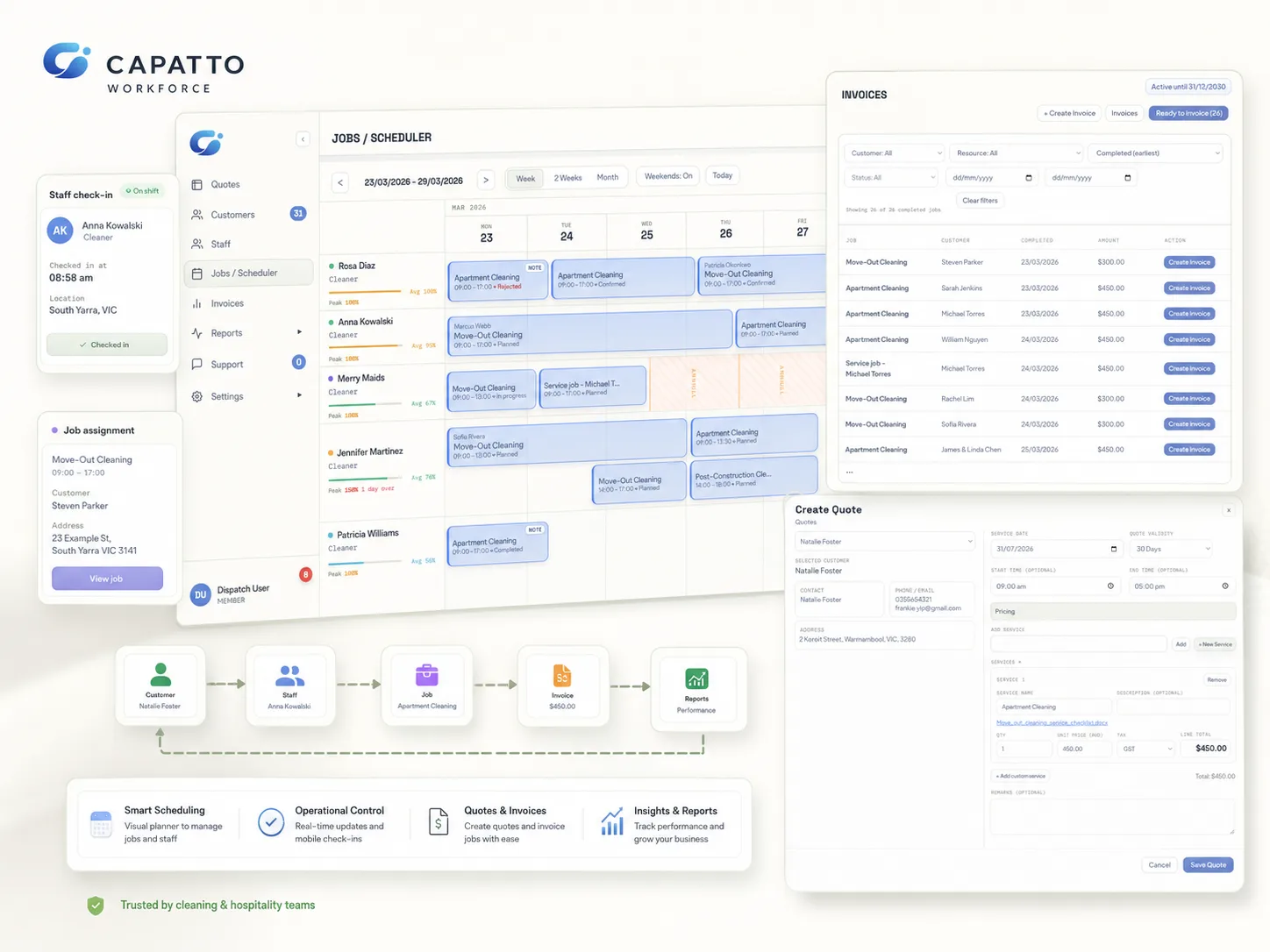
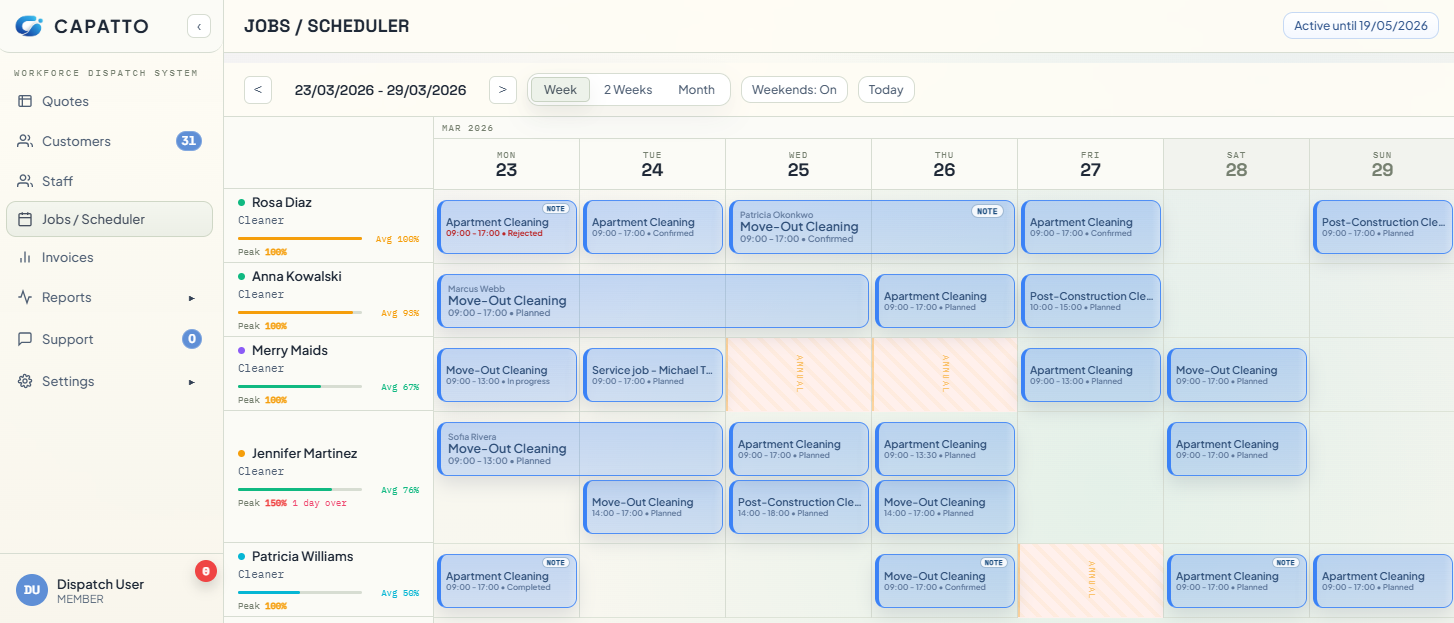
Capatto Workforce scheduler showing jobs, resources and allocations

The original question

Could we promise the work?

A calendar can show when work is scheduled. It cannot, by itself, show whether the organisation genuinely has the capacity to deliver it.

A truthful capacity model accounts for

Working hoursPart-time patternsProject date windowsExisting allocationsLeaveWeekends & holidaysAvailability changes

The planning problem was not a missing calendar. It was missing context.

Building the planning foundation

Capacity is personal.

An organisation can define default hours per day, but people do not all work the same week. Capatto made individual working patterns, roles, departments and leave configurable rather than hardcoded.

Weekly capacity is calculated from the reality of the person, not an idealised eight-hour day.

Individual weekly patternCapacity calculated automatically
Mon8hTue8hWed4hThu8hFri0h
Part-time arrangement28h available

Making the schedule tell the truth

An allocation is more than a coloured block.

Projects, resources, timelines and allocations became connected. The schedule had to respect active dates, availability, existing commitments, non-working days, leave, holidays and permission rules.

Capatto jobs and scheduler interface with resource allocations
Active project datesResource availabilityExisting allocationsLeave & holidays

From planning to Workforce Dispatch

A good plan still has to reach the worker.

Planning solved the management question, but exposed the next one: how does the person doing the work receive the latest assignment?

When an assignment is created, changed or cancelled, Capatto can send an event-specific message with a secure signed schedule link and optional instruction link.

The worker experience is a responsive, secure schedule view — not a native mobile app.

Plan workAssign resourceNotify workerOpen secure scheduleFollow instructionsReceive updates

Two products growing from one operational model

One planning foundation. Two connected capabilities.

01 · Project planning

Decide whether the work is possible.

Plan against real people, real time and real constraints before a commitment is made.

  • Projects and timelines
  • Resources and working patterns
  • Allocation scheduling
  • Leave and public holidays
  • Capacity and utilisation
  • Planning risk and analytics

02 · Workforce Dispatch

Turn an approved plan into action.

Carry the allocation through to the people who need to understand and perform the work.

  • Customers and jobs
  • Assignment communication
  • Secure worker schedules
  • Job instructions
  • Operational progress
  • Dispatch history and accountability

The invisible product work

Trust required more than a scheduler.

To become a real SaaS platform, Capatto needed a dependable layer beneath the interface: commercial, tenant and operational rules that could be trusted as the product grew.

Trial activation and subscription lifecycleStripe checkout, invoices and remindersFeature entitlements for dispatch actionsTenant-scoped access and permissionsExpiring and revocable signed linksHistory, logs and governed reference data

Deliberate product boundaries

Knowing what not to build.

Capatto remained planning-first. The product became more useful by staying clear about where it should stop.

No payroll systemNo payroll calculation or payroll export.

No native mobile appA secure responsive schedule keeps the worker experience focused.

No full project-execution replacementThe platform connects planning and dispatch without unnecessary complexity.

Development evolution

Each capability made the next one possible.

  1. 01Model the organisationDefault hours, roles, departments and configurable reference data.
  2. 02Model individual capacityWeekly work patterns, availability and resource-specific capacity.
  3. 03Connect people with projectsProject timelines, visual allocations and scheduling rules.
  4. 04Make capacity accurateLeave, weekends, holidays, utilisation and risk visibility.
  5. 05Take the plan into the fieldDispatch notifications, instructions and secure worker schedules.
  6. 06Make it commercially operableTrials, Stripe billing, entitlements, permissions and auditability.

The result

One platform, from capacity to action.

Capatto connects two questions that are often handled separately: do we have the capacity to take on the work, and how do we get that work to the right person?

Managers can plan against real availability, understand pressure before it becomes a problem and turn an approved allocation into a clear worker assignment.

The most useful workforce decision happens before somebody is dispatched. It happens when a business understands what its people can realistically deliver.

A better way to plan and operate

Need to connect your plans with the people doing the work?

Let’s design the operation